Unit patch and crest preparation
Families often want a unit patch or a post crest on a tribute. What they have is a photo of cloth or a tiny web image. Honor Guard Awards checks the artwork at plaque size, asks about permission to reproduce it, and prepares a clean version when the original cannot be used.
Explore the service process
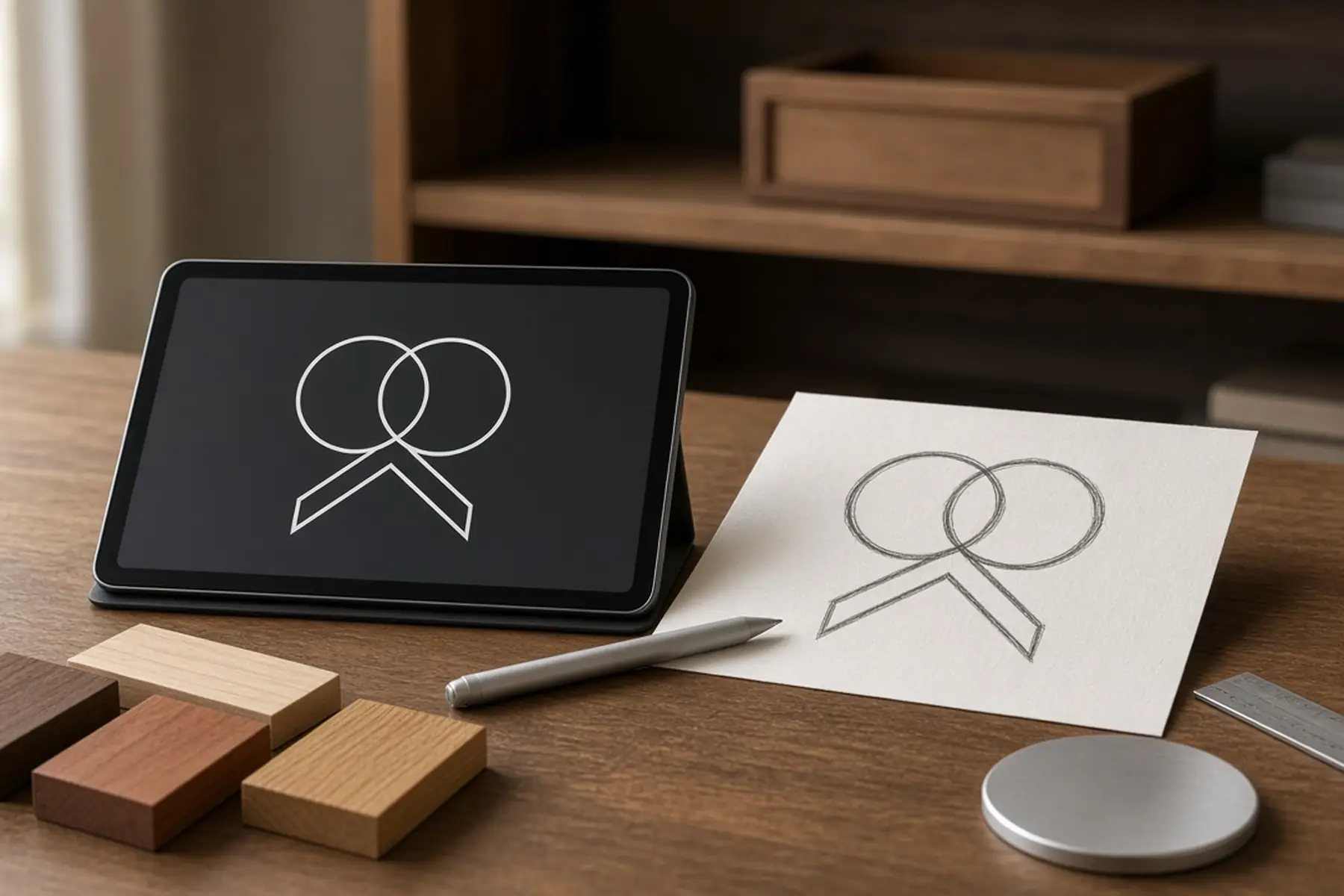
AI-generated process illustration. Equipment, materials and packaging shown are examples, not photographs of our workshop or completed orders.
Can a unit patch from a photo be put on a memorial plaque?
Often, yes, if you have the right to reproduce it and the photo is clear. Honor Guard Awards redraws the main shapes and lettering from a flat, well-lit photograph of the patch, then shows you the result beside the original. Fine stitching, gradients and tiny mottoes are simplified so they engrave cleanly on a Veteran Memorial Plaque.
How does a family prepare a unit patch for a memorial?
A family is placing a Veteran Memorial Plaque in a post's memorial garden for their father, who served in the United States Army. They want his unit patch beside his name. What they own is the patch itself, sewn on his old jacket. A son lays the jacket flat under daylight and photographs the patch straight on. Honor Guard Awards traces the shield, the two main colors and the unit motto, and drops the fine stitching that would turn into a gray smear at the engraving size. The family confirms the unit is willing for its insignia to appear, and the proof shows the redrawn patch next to the photo for comparison.
An example from this collection
Veteran Memorial Plaque
Have the family approve the final wording and any emblem. Decide whether the plaque will be indoors or at an outdoor memorial before choosing the material, finish and attachment method.
The details to personalize: name, life dates, service, dedication. The product page lets you enter them and carry the design into your quote request.
What should you gather before sending an emblem?
01
Photograph the real object flat
Lay the patch, coin or certificate flat in daylight and shoot straight down. A single clear photo beats five angled ones, and it gives us the true proportions to work from.
02
Confirm you may reproduce it
Unit insignia, post crests and group logos belong to someone. Ask the unit, the post or the group for permission in writing, and keep that message with your order.
03
Say what must survive
Tell us which parts matter to the veteran: the shield shape, the motto or a particular animal. We keep those and simplify everything else to suit the plaque size.
Order terms in brief: Low minimums · production takes no more than 7 days, plus transit · rush available · worldwide shipping · 100% satisfaction refund. Full wording in the FAQ.
Questions about unit patch and crest preparation
Can a unit patch from a photo be put on a memorial plaque?
Often, yes, if you have the right to reproduce it and the photo is clear. Honor Guard Awards redraws the main shapes and lettering from a flat, well-lit photograph of the patch, then shows you the result beside the original. Fine stitching, gradients and tiny mottoes are simplified so they engrave cleanly on a Veteran Memorial Plaque.
Can you reproduce an official military seal on a veteran plaque?
Service seals and emblems are controlled artwork, and reproducing them needs authorization you must obtain. Without it, we use the branch name in full and a motif in branch colors instead. The Branch Motif Acrylic Award is designed around exactly that approach, so the tribute still reads clearly.
Is there a charge for redrawing a patch or crest?
When redrawing is needed, it appears as its own line in the written quote. A clean photo of a simple shield takes less work than a worn patch with a scrolled motto. Send the clearest image you can find first, and the quote will say what the redraw involves before anything is charged.
Can a post or employer logo go on the gift as the presenter?
Yes, when the post or company supplies its logo file and agrees to its use. It usually sits at the bottom near the Presented by line, smaller than the veteran's name. This keeps the piece about the person being honored, with the giver identified clearly but quietly.